Panama
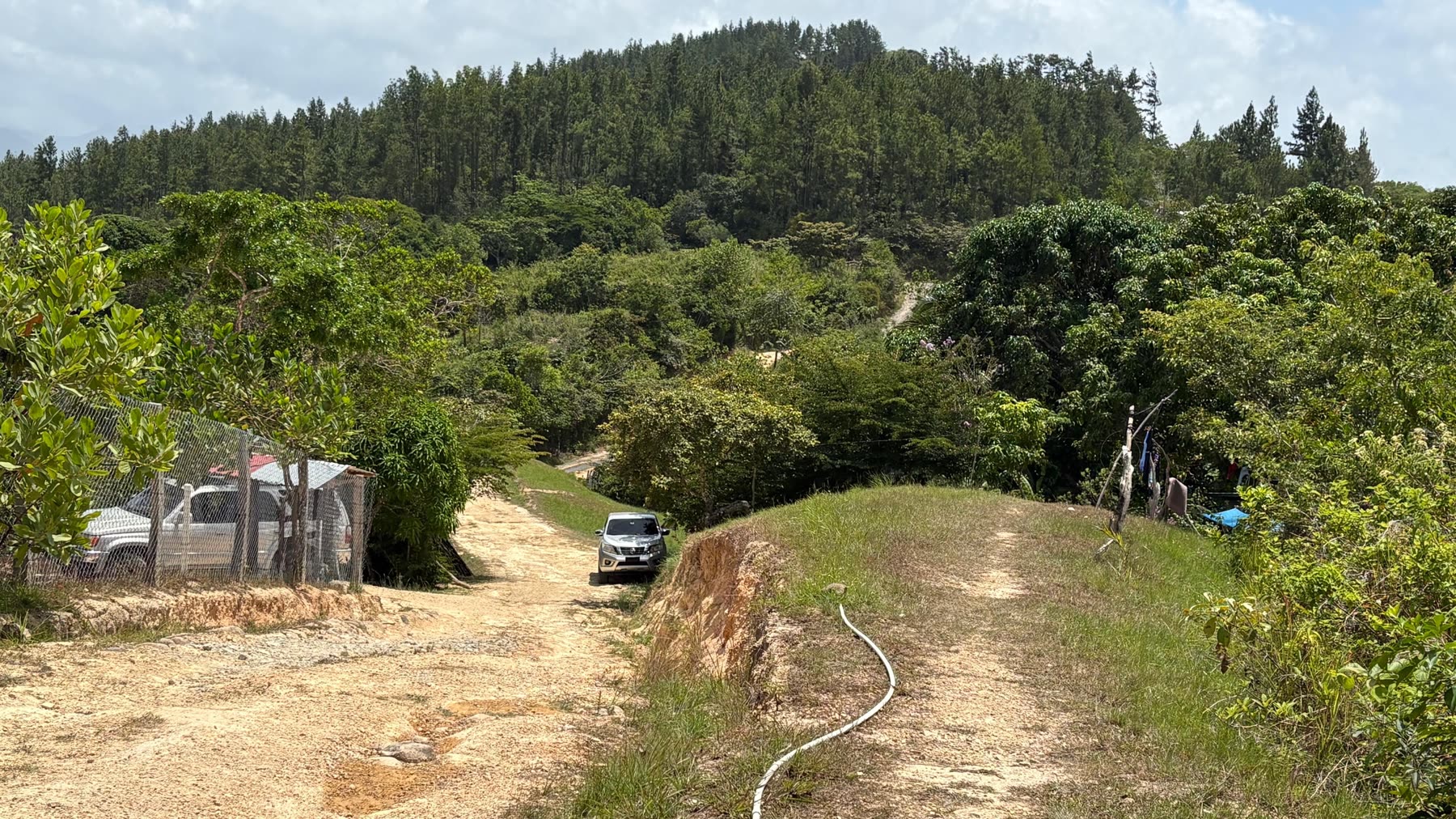
An hour past the last power line
This is not a country in the dark. Panama has cities, highways, a canal that half the world's cargo passes through. The families we work with live a short drive and a long walk from all of it.
Running a power line is arithmetic. A utility looks at the distance, the terrain, the number of houses at the end of it, and what those houses will pay each month. Past a certain point the arithmetic says no, and it keeps saying no forever, no matter how many children are doing homework by candlelight at the other end.
That line has to cross a river, climb a ridge, and hold up in a rainy season that takes trees down across it every year. At the end of it are eight houses. The math does not change. It has not changed for those families in their whole lives, and it will not change for their children either.
The grid was never coming. That is not a complaint about anyone. It is just the shape of the map.
Why solar, and not advocacy for a lineWhere we work
Rural districts and the comarcas, the indigenous territories where the gap between the national electrification rate and daily life is widest. Getting there means a road, then usually a boat or a walk with the hardware on your back.
Nationally, Panama connects the large majority of its households. That statistic is true and it is also why these families are so easy to forget. When a country is mostly finished, the ones left over stop being a policy problem and start being a rounding error.
Why solar is the right answer here
- Nothing to extend. No poles, no permissions, no waiting for a utility to change its mind.
- Nothing to buy each week. Kerosene and candles are a permanent tax on the poorest houses. Sun is not.
- Nothing to explain. A switch on the wall works the way everyone already expects it to.
- It survives the weather. Panels ride out the rainy season better than a line strung through the trees.
What it replaces
Kerosene lamps, candles, and phone screens held up to read by. Kerosene burns money every week and fills a small room with smoke that children sleep in. Candles start fires in houses built of wood. Phone batteries die, and charging one can mean a trip to town and a fee. Every one of those is a worse deal than a panel on the roof, and every family knows it. They just have never had four hundred dollars sitting free at one time.
It is not that the solution was unknown. It is that nobody had put the money on the table.
The whole reason this campaign existsKeep reading
The rest of the picture
The map does not change. This does.
$400 puts light in one of the houses at the end of the line. We are 5 in, 20 to go.
Donate on GoFundMeOpens in a new tab.