The kit
Four pieces of hardware and one long day
A solar kit is not complicated. That is the point. It is a small amount of equipment, carried a long way, wired by someone who lives nearby, and left running for years.
Most of the families we work with have never had a switch on the wall. Their evening runs on a candle, a kerosene lamp, or a phone held up like a torch until the battery dies. The kit does not fix poverty and it does not pretend to. It gives back the four or five hours a day that darkness takes away.
What is in the box
Every kit is the same, so every repair is the same, and so anyone we train can fix any house in the district.
- Two 100W solar panels. Enough for the whole evening, even in the rainy season.
- A lithium battery. Holds the day's sun until the sun is gone.
- Three LED lights. Kitchen, main room, porch.
- Wiring, switches, and mounts. Fixed properly, not taped to a beam.
- Transport and the install itself. Getting it up the road and onto the roof.
Together that comes to $400 a home.
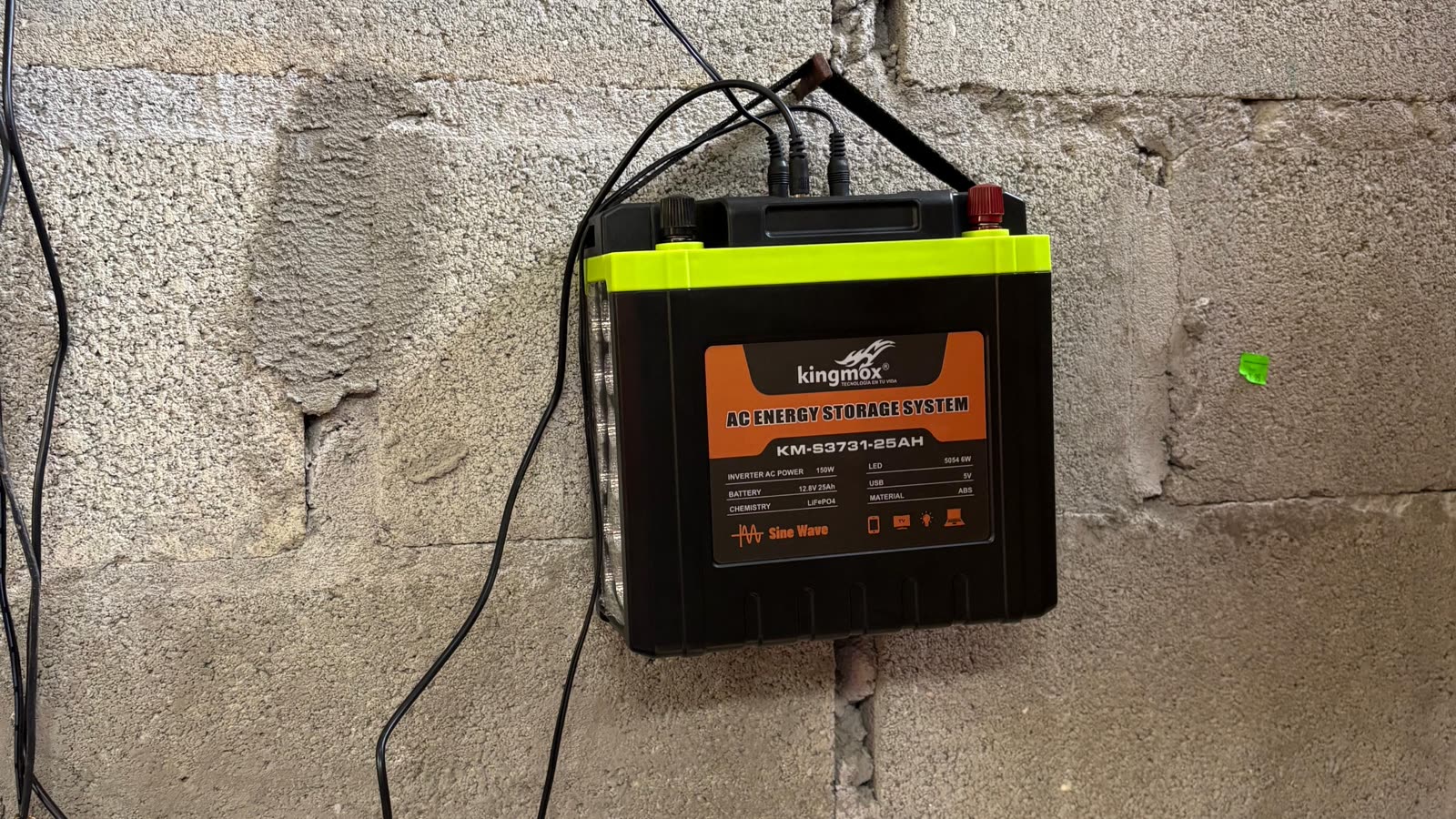
What your money actually buys
Drag it. Every number below is the real hardware, in the order we buy it.
One LED light, wired and mounted.
Not quite a whole home yet. A kit is $400.
How a home gets chosen
We do not pick from a spreadsheet. We ask the people who already know: the community leaders in the comarcas, the teachers, the health workers who walk these roads every week. They know which house is furthest from the line. They know which family has three kids in school and one lamp between them. They know who has been waiting the longest without asking anyone for anything.
The family agrees to two things. That we can come back and check the system twice a year, and that if a neighbour asks how it works, they will show them.
The list is not ours. It belongs to the people who have been watching these houses go dark for years.
How every install startsInstall day
Panels go up in the morning. Wiring runs through the afternoon. Somewhere before dark, usually with half the neighbourhood standing in the doorway, someone in the family gets to flip the switch for the first time. Kids reach for it first. They turn it on and off maybe twenty times, and nobody stops them.
Before we leave, we walk the family through it in Spanish, leave the instructions on paper, and give them a number to call. A técnico from the same district does the install, so the person who built it is the person who can come back.
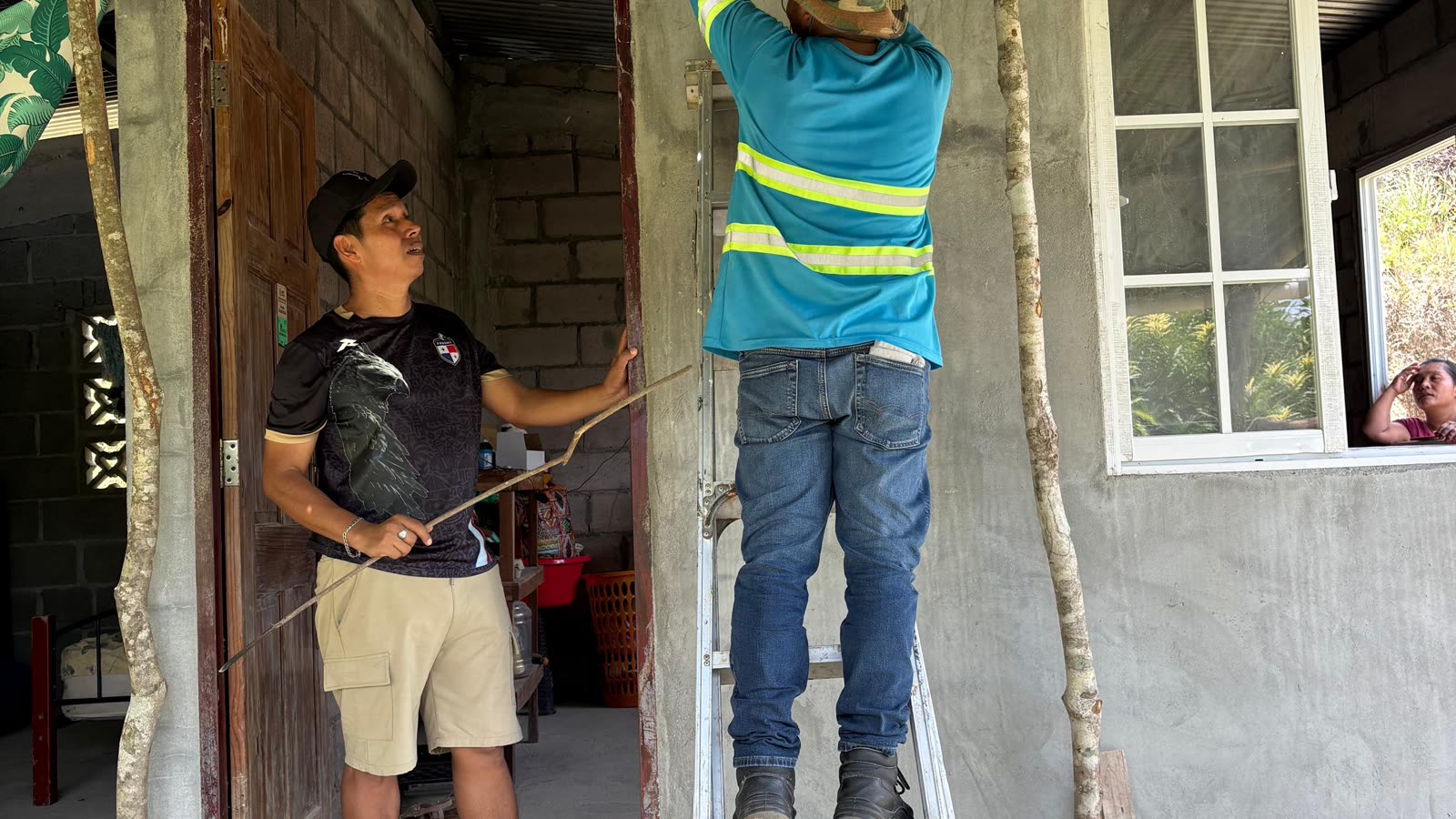
The years after
A kit that dies in eighteen months is worse than no kit, because it teaches a family that this kind of help does not last. So we go back at six months and at twelve, and the repair budget comes out of the fund before any new kit is bought. If a light fails, we replace it. If a battery drops, we replace it. That is not generosity. It is the difference between a project and a gesture.
- Every kit is logged with its house, its install date, and the person who wired it.
- Repairs are funded before expansion. Always.
- If a family moves, the kit goes with them.
Keep reading
What this looks like from inside a house
-
The stories
What actually changes in a home when the dark stops at the doorway.
Read the stories -
Why Panama
A country that is mostly connected, and the families the line never reached.
See where we work -
Who is behind this
A high school student, his father's country, and a promise he made himself.
Meet Tiago
Four hundred dollars is one house, forever
We are 5 homes in with 20 to go. Every donation is tied to the next kit on the list.
Donate on GoFundMeOpens in a new tab.